
Notes from the Evidence Project | December 9
Greetings! This is the last Evidence Project Newsletter of 2025. We’re grateful for you, our readers, as we end another successful year of highlighting the trends and evidence that matter most for improving outcomes in K–12 systems. Happy holidays and see you in the new year! 🎆
This issue includes:
The latest updates on learning recovery, or possibly a lack thereof
Research on tutoring programs in schools
Discussion of school staffing solutions
Critical developments in math research and policy in our Math Corner
Learning Recovery
More than five years after the first pandemic school shutdowns, it makes sense to ask whether debate about school closures and learning recovery is still relevant today. Evidence from Brown University’s Education Data Center suggests that it is. Although the relationship between time spent in remote schooling in 2020-21 and learning declines is smaller now than early in the pandemic, it is still the case that, on average, school systems that closed the longest are performing worse on state assessments than those closed for less time.
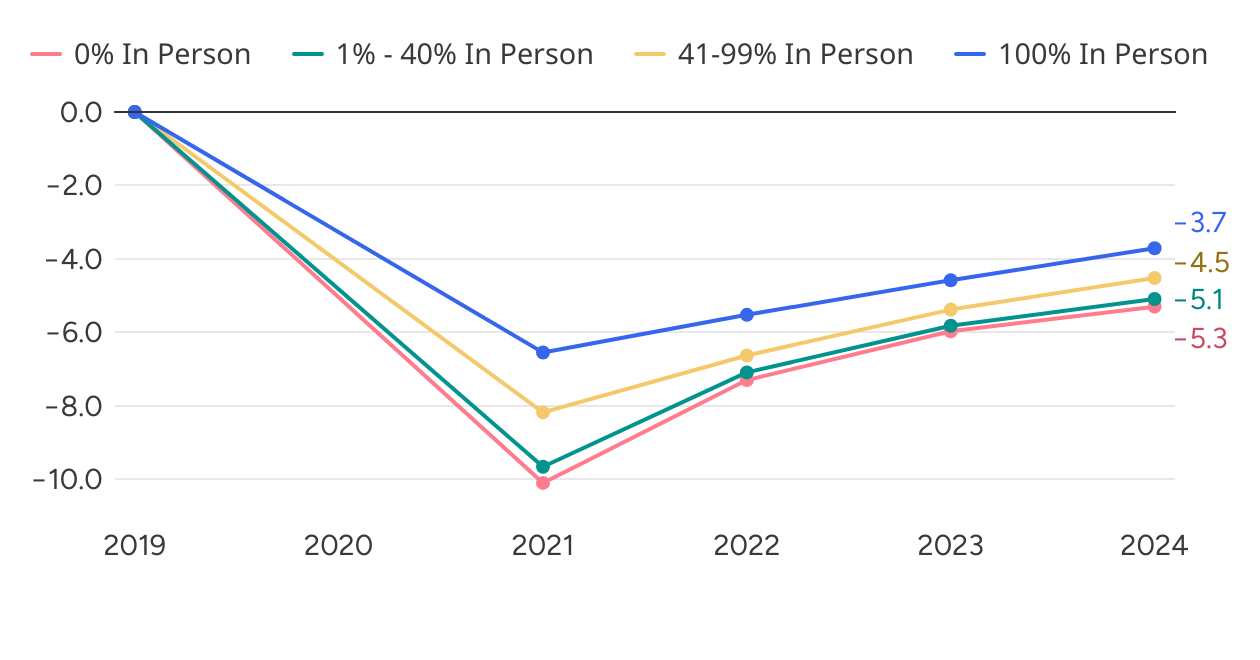
However, it is unclear from the data how much of this effect is true learning recovery—where students who scored low in 2021 improved their scores in subsequent years—as opposed to a compositional effect, where students with extreme learning loss have aged out of testing grades, and students who were too young to experience substantial pandemic interruptions have aged in.
Unfortunately, available data are consistent with the latter explanation—schools appear to be improving as their students in testing grades age out, replaced by students less impacted by the pandemic. Consistent with this idea, 58% of middle and high school teachers reported that over 25% of their students struggled with basic reading skills in a recent nationally representative survey from EdWeek. Almost all teachers reported that their sixth- through twelfth-grade students struggle with basic reading skills.
Beyond school closures, experts have also marked a concerning decline in how often parents read to their young children. The proportion of 0-4-year-olds whose parents read to them every day dropped from 56% in 2012, to 50% in 2019, to 41% in 2025. Some of this decline may relate to a general cooling on traditional education as the route to upward economic mobility. However, experts warn that rigorous academics are still essential, even while less traditional educational paths are rising in prominence.
Further Reading:
Experts warn that widespread pandemic learning loss may be masking learning disabilities for some students, especially students of color.
Absenteeism continues to be a barrier to learning recovery—parents and school leaders often disagree about when it is appropriate for students to miss school.
Tutoring Programs
High-impact tutoring has emerged as a key learning recovery intervention. A new report from Johns Hopkins provides estimates of the prevalence of tutoring supports in K-12 schools: nearly half of schools offer tutoring, but generally to just a small subset of their students (20% or fewer), and most (more than seven in ten) school leaders report that not all students who need these services are receiving them. Nearly half a million adults work as tutors in these programs, and the programs are still growing, year over year. To keep current with the latest research findings, Stanford’s National Student Support Accelerator recently revised its Tutoring Quality Standards.

Research continues to refine our understanding of how best to implement tutoring programs. New experimental evidence suggests that one-on-one online math tutoring is more effective than small-group (three-to-one) tutoring. The report highlighted greater student effort and fewer distractions in one-on-one settings as possible drivers of this difference.
Experimental data from the UK may offer a way forward for districts that want the academic benefits of one-on-one tutoring without the high associated costs. Students who received math help from an AI-enabled language model supervised by a human tutor performed as well as those receiving math help directly from a human and better than those receiving help via static (non-AI) prompting. Although a human tutor was present to edit the AI model’s messages before sending them to the student, tutors sent most messages (76%) with no or minimal edits. That 76% still might be too low for a district to feel confident implementing AI math tutoring without human supervision, but as the technology improves, pedagogy-trained language models may begin to approach human levels of tutoring ability.
Further Reading:
Although federal pandemic recovery funding ended last year, many schools support tutoring programs using other pools of federal funds. Experts warn that these programs now risk elimination.
The jury is still out on the effectiveness of widely used, AI-powered reading tutors.
Staffing Solutions
Two articles from the Education Commission of the States discuss areas and subjects with persistent staffing shortages and highlight four state-level incentives for filling teaching positions.
A new report from the National Parents Union shows that:
Teaching and nursing are observably fairly similar professions
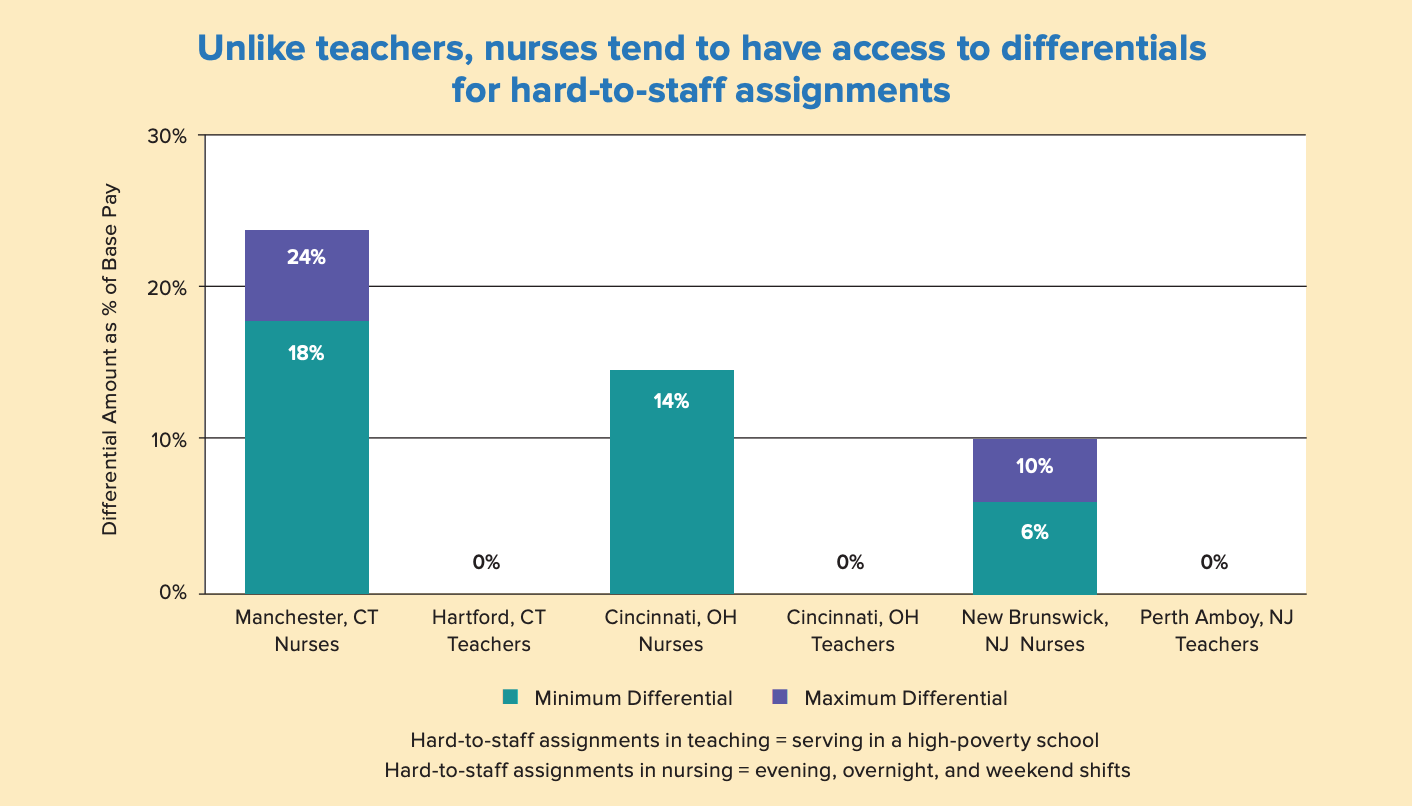
Bonus pay for teaching in hard-to-staff schools and subjects is relatively uncommon in teachers unions’ collective bargaining agreements (CBAs)
Bonus pay for nursing in hard-to-staff hospitals and specializations is much more common in nursing unions’ CBAs, and
In many areas, the same union represents both teachers and nurses, and has negotiated CBAs with pay structures to incentivize work in hard-to-staff positions for nurses but not teachers.
Therefore, they argue (quite compellingly) in favor of bonus pay for hard-to-staff teaching positions.
Further Reading:
Teacher preparation programs often produce graduating classes less diverse than their state’s teacher workforce, diminishing diversity in the profession, according to evidence from the National Council on Teacher Quality.
A new working paper maps a set of special educator staffing challenges across seven states over time.
A study of teacher turnover in Michigan’s turnaround schools during the pandemic offers evidence that turnaround interventions decrease turnover associated with negative, external shocks like the pandemic, perhaps by improving school working conditions.
A survey of 1,095 superintendents found that nearly nine in ten were satisfied or very satisfied with their job. However, the survey sample was not representative, and it is possible that less-satisfied superintendents did not respond to the survey.
Math Corner
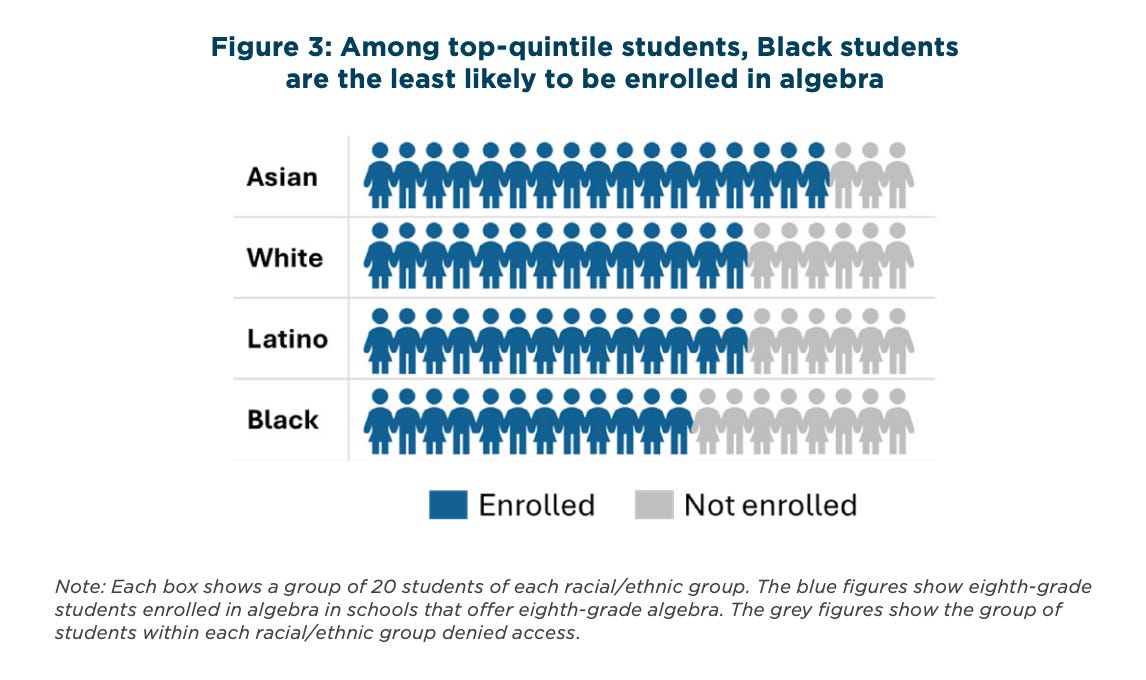
A new report from NWEA shows that even among the top quintile of math performers at schools that offer eighth-grade algebra—all students one would expect to be academically prepared for the course material—Black and Latino students are placed into eighth-grade algebra at lower rates than their White and Asian peers. The paper’s authors argue that more states should adopt universal screeners as drivers of equity.
Further Reading:
Influential Stanford math education researcher Jo Boaler offers tips for creating powerful math experiences for students in an Edutopia blog post.
Ohio has released a statewide plan for K-12 mathematics, focused on adopting high-quality instructional materials and increasing instructional rigor.
Thanks for being a subscriber! If you find the Evidence Project Newsletter valuable, please consider sharing it with friends or colleagues who would appreciate it.
As always, if you have feedback or want to alert us to new research, please drop us a comment or shoot us an email.
—The Evidence Project Team and newsletter co-writers
Dan Silver, University of Southern California Center for Applied Research in Education
Lisa Chu, Center on Reinventing Public Education